planned development actually searted in nepal in mid-fifties . five year plan Document make the basis of National Development plicy ; plant & program.They not onely set plcy farmework for the country's development strategy but also identify foucus of sector develpment . currently the tenth Five year plan is under implementation.
Nepal
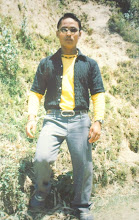
Dudharaj Lama (Thing)
Tamajor 9 sindhuli
Nepal
Wednesday, February 13, 2008

complimentari khmer set Dinner Incetive
For two persons
(only applicable to guests making a reservation through these Search Engine pages)
Our authentic Khmer set dinner for two persons, is served on our unique swing dining platforms in the courtyard garden. The ficus tree located in the centre of the garden pool, amidst natural flame torches and ambient lighting complements the mellow background music and creates the perfect setting for a romantic and gastronomic encounter.
Relax and indulge yourself. Savour each of the seven courses, and perhaps even have a nap in mid-meal.
(only applicable to guests making a reservation through these Search Engine pages)
Our authentic Khmer set dinner for two persons, is served on our unique swing dining platforms in the courtyard garden. The ficus tree located in the centre of the garden pool, amidst natural flame torches and ambient lighting complements the mellow background music and creates the perfect setting for a romantic and gastronomic encounter.
Relax and indulge yourself. Savour each of the seven courses, and perhaps even have a nap in mid-meal.
desert
"I will put in the desert the cedar and the acacia, the myrtle and the olive. I will set pines in the wasteland, the fir and the cypress together, so that people may see and know, may consider and understand, that the hand of the Lord has done this, and the Holy One of Israel has created it."
Isaiah 41:19-20
Isaiah 41:19-20
Share
We Share The GospelDiscipleship occurs through the long-term relationships that are formed as the Floresta staff works with community leaders. The good news of Jesus is woven into much of what we do, but through the process of discipleship, people grow in their faith, and become servant leaders in their communities.
Floresta emphasizes discipleship rather than simply evangelism. We do this for several reasons. For one, we have seen far too many cases of agencies doing crusades or outreaches with no follow-up. Dozens of decisions for Christ are recorded, but no one stays around to explain or model the radical, life-changing implications of the gospel. A grim reminder of this comes in considering that Rwanda had the highest percentage of Christians in Africa, before the genocide
We also emphasize discipleship because the nature of our work permits us to have a long-term relationship with people. We are likely to be working with the people of a particular village for ten to twelve years. This provides the perfect opportunity to assist in the spiritual growth of both community and church leaders. Finally, we partner with local churches, and through discipleship we are able to empower the body of believers and assist church members to reach out to their neighbors in new and vital ways.
Of course, we are very clear that participation in the spiritual activities of Floresta is not a requirement to receive our services. The love and the opportunities and we are sharing are unconditional. We do not want anyone to feel coerced by their poverty to accept something that is not in their heart. At the same time we make it easy for people to seek out the gospel and understand the source of our love.
Each local team (Haiti, Mexico and the Dominican Republic) has a field chaplain who coordinates our outreach, but one of the primary roles of the field chaplain is equipping the staff itself so that each one can effectively communicate the gospel. Our methods of outreach include the following:
We weave spiritual truth into our regular teaching on agriculture, on business, on leadership and on land stewardship. For example, Col. 3:23 (Whatever you do, do your work heartily, as for the Lord rather than for men,) might be used introduce a topic on business.
In each country we are developing a Bible study, which is available for those who want to go deeper. Ideally volunteers who receive their training from the field chaplain will lead this.
We have an ongoing discipleship program for our staff, to nurture them spiritually, so that they are better prepared to minister to those around them.
We make an effort to reach out to the local churches, to strengthen, serve and partner with them.
We disciple promising leaders through seminars and one-on-one meetings, so that they can be truly Christ-like in their leadership.
We are starting to see results from this program, manifested in changed lives, and we look forward to seeing more.
Floresta emphasizes discipleship rather than simply evangelism. We do this for several reasons. For one, we have seen far too many cases of agencies doing crusades or outreaches with no follow-up. Dozens of decisions for Christ are recorded, but no one stays around to explain or model the radical, life-changing implications of the gospel. A grim reminder of this comes in considering that Rwanda had the highest percentage of Christians in Africa, before the genocide
We also emphasize discipleship because the nature of our work permits us to have a long-term relationship with people. We are likely to be working with the people of a particular village for ten to twelve years. This provides the perfect opportunity to assist in the spiritual growth of both community and church leaders. Finally, we partner with local churches, and through discipleship we are able to empower the body of believers and assist church members to reach out to their neighbors in new and vital ways.
Of course, we are very clear that participation in the spiritual activities of Floresta is not a requirement to receive our services. The love and the opportunities and we are sharing are unconditional. We do not want anyone to feel coerced by their poverty to accept something that is not in their heart. At the same time we make it easy for people to seek out the gospel and understand the source of our love.
Each local team (Haiti, Mexico and the Dominican Republic) has a field chaplain who coordinates our outreach, but one of the primary roles of the field chaplain is equipping the staff itself so that each one can effectively communicate the gospel. Our methods of outreach include the following:
We weave spiritual truth into our regular teaching on agriculture, on business, on leadership and on land stewardship. For example, Col. 3:23 (Whatever you do, do your work heartily, as for the Lord rather than for men,) might be used introduce a topic on business.
In each country we are developing a Bible study, which is available for those who want to go deeper. Ideally volunteers who receive their training from the field chaplain will lead this.
We have an ongoing discipleship program for our staff, to nurture them spiritually, so that they are better prepared to minister to those around them.
We make an effort to reach out to the local churches, to strengthen, serve and partner with them.
We disciple promising leaders through seminars and one-on-one meetings, so that they can be truly Christ-like in their leadership.
We are starting to see results from this program, manifested in changed lives, and we look forward to seeing more.
Create Enterprice
We Create Enterprise Credit helps people afford to progress beyond bare subsistence, as well as to diversify village economies. Micro-enterprise credit is the world’s most effective poverty fighter.
Floresta has been involved in credit systems and business creation since its founding in 1984. Floresta’s initial vision was very entrepreneurial and Floresta’s founders sought to use business principles in their approach to environmental problems.
Floresta’s first big project was starting Los Arbolitos, a large-scale for-profit nursery business which has employed as many as 250 people and has had up to $800,000 in annual sales. Seventeen years later Los Arbolitos is still going strong. It has in many ways revolutionized the Dominican nursery business and has been instrumental in the development of its forestry laws.
In 1987 Floresta began making medium-scale loans ($3000-5000) to poor farmers in the Dominican Republic for agroforestry farms. After making about 300 of these loans, we branched out to offer a wider variety of loans to small rural entrepreneurs. We have financed almost dozens of different businesses including mechanic shops, bakeries, beauty salons and tailors, with amounts ranging from $500 to $2000. Recently we started a sawmill business with three sawmills.
When we started our program in Haiti in 1998 years ago we learned that Haiti had a bad track record with credit. For this reason we started small. We also found that people needed an incentive to try new farming techniques, so we made that a prerequisite for receiving credit. Over 20 credit co-ops act as peer accountability groups. Thus far we have made about 2000 small loans ranging from $50-$125. They have been used for land, seed, livestock, retail and some resale. Many farmers who were formerly sharecroppers can now point proudly to the land they own, thanks to the Floresta program.
In Mexico , much of the local economy is based on illegal charcoal production. Charcoal is sold for use in nearby Oaxaca City and other than money sent from migrant workers in the United States , it is the main source of income to the region. Thus, almost any business that diversifies the economy combats deforestation. For this reason, we gave borrowers freedom to try their own ideas. Suddenly we unleashed their creativity and I was amazed at the entrepreneurial spirit of the people. We have made dozens of loans, ranging from $50 to $2000. Businesses include three carpentry shops (two produce high quality furniture and one specializes in wooden rocking horses), a welding shop, a public phone (the only one in town), several restaurants, craft manufacturing, various resale activities and a pharmacy.
We have seen tremendous changes in the villages where we are working, but it is our hope to revitalize the rural economy from the ground up, healing the land and its people, and sharing the love of Christ with those we serve.
Floresta has been involved in credit systems and business creation since its founding in 1984. Floresta’s initial vision was very entrepreneurial and Floresta’s founders sought to use business principles in their approach to environmental problems.
Floresta’s first big project was starting Los Arbolitos, a large-scale for-profit nursery business which has employed as many as 250 people and has had up to $800,000 in annual sales. Seventeen years later Los Arbolitos is still going strong. It has in many ways revolutionized the Dominican nursery business and has been instrumental in the development of its forestry laws.
In 1987 Floresta began making medium-scale loans ($3000-5000) to poor farmers in the Dominican Republic for agroforestry farms. After making about 300 of these loans, we branched out to offer a wider variety of loans to small rural entrepreneurs. We have financed almost dozens of different businesses including mechanic shops, bakeries, beauty salons and tailors, with amounts ranging from $500 to $2000. Recently we started a sawmill business with three sawmills.
When we started our program in Haiti in 1998 years ago we learned that Haiti had a bad track record with credit. For this reason we started small. We also found that people needed an incentive to try new farming techniques, so we made that a prerequisite for receiving credit. Over 20 credit co-ops act as peer accountability groups. Thus far we have made about 2000 small loans ranging from $50-$125. They have been used for land, seed, livestock, retail and some resale. Many farmers who were formerly sharecroppers can now point proudly to the land they own, thanks to the Floresta program.
In Mexico , much of the local economy is based on illegal charcoal production. Charcoal is sold for use in nearby Oaxaca City and other than money sent from migrant workers in the United States , it is the main source of income to the region. Thus, almost any business that diversifies the economy combats deforestation. For this reason, we gave borrowers freedom to try their own ideas. Suddenly we unleashed their creativity and I was amazed at the entrepreneurial spirit of the people. We have made dozens of loans, ranging from $50 to $2000. Businesses include three carpentry shops (two produce high quality furniture and one specializes in wooden rocking horses), a welding shop, a public phone (the only one in town), several restaurants, craft manufacturing, various resale activities and a pharmacy.
We have seen tremendous changes in the villages where we are working, but it is our hope to revitalize the rural economy from the ground up, healing the land and its people, and sharing the love of Christ with those we serve.
We plant
We PlantInnovative Agriculture and Forestry enables farmers to make the best possible use of the resources that they already possess. We teach and promote agroforestry, reforestation, soil conservation, and a host of other sustainable techniques.
Subsistence farmers grow their crops to eat, rather than to sell. The land is where they extract their entire subsistence. Thus improving their agriculture radically improves their diet, nutrition, health and income.
We have focused on farmers who live in areas severely affected by deforestation. Most often they contributed to that deforestation, clearing the land for farming or firewood. Deforestation exacerbates erosion and dries up the land, making a plot productive for two years or less. Many farm steep hillsides since this is the only land available to the poorest families. This makes it even more difficult to survive.
Floresta teaches a particular type of agriculture that is particularly suited to these steep eroded hillsides: agroforestry. Agroforestry combines trees with more traditional agriculture, in ways that provide unique benefits both to traditional crops and the land. For example the trees reduce erosion, slow evaporation and provide shade. Some may provide other benefits, such as fixing nitrogen in the soil or acting as natural pest control. At the same time the trees provide many useful products such as fruit. They make it possible for a hillside farm to produce more and be productive for a much longer period.
As Floresta has grown, we have expanded our toolbox to include other agricultural techniques. We are teaching the use of cover crops, raised-bed gardening, seed selection, soil conservation, natural pest control, organic farming, fish farming and animal husbandry. In areas where villages still have access to significant natural forest resources, we have begun to teach sustainable forestry management. Projects include assisting communities to start local tree nurseries and replant unproductive hillsides.
As a result of our work over 2 million trees have been planted by participating farmers and crop yields have dramatically increased. Farmers in Haiti have told us that they are getting up to three times as much corn and beans as before.
Many of the crops being grown have commercial value, so farmers are able to improve their income, and begin to change their economic situation.
Subsistence farmers grow their crops to eat, rather than to sell. The land is where they extract their entire subsistence. Thus improving their agriculture radically improves their diet, nutrition, health and income.
We have focused on farmers who live in areas severely affected by deforestation. Most often they contributed to that deforestation, clearing the land for farming or firewood. Deforestation exacerbates erosion and dries up the land, making a plot productive for two years or less. Many farm steep hillsides since this is the only land available to the poorest families. This makes it even more difficult to survive.
Floresta teaches a particular type of agriculture that is particularly suited to these steep eroded hillsides: agroforestry. Agroforestry combines trees with more traditional agriculture, in ways that provide unique benefits both to traditional crops and the land. For example the trees reduce erosion, slow evaporation and provide shade. Some may provide other benefits, such as fixing nitrogen in the soil or acting as natural pest control. At the same time the trees provide many useful products such as fruit. They make it possible for a hillside farm to produce more and be productive for a much longer period.
As Floresta has grown, we have expanded our toolbox to include other agricultural techniques. We are teaching the use of cover crops, raised-bed gardening, seed selection, soil conservation, natural pest control, organic farming, fish farming and animal husbandry. In areas where villages still have access to significant natural forest resources, we have begun to teach sustainable forestry management. Projects include assisting communities to start local tree nurseries and replant unproductive hillsides.
As a result of our work over 2 million trees have been planted by participating farmers and crop yields have dramatically increased. Farmers in Haiti have told us that they are getting up to three times as much corn and beans as before.
Many of the crops being grown have commercial value, so farmers are able to improve their income, and begin to change their economic situation.
We Teach community
We TeachCommunity Development is the process of empowerment. This takes time, but results are profound and long lasting. Community development encourages poor farmers to take ownership of their own problems, and gives them the confidence to apply solutions.
At Floresta, teaching takes many forms. Floresta teaches sustainable agriculture and business skills as well as offering Biblical teaching. But when the Floresta mission statement says “We Teach,” perhaps the most important teaching involves teaching communities to solve many of their own problems. This is known as community development.
Community development is the process of helping farmers to take responsibility for their own problems and to work together to find solutions for them. Many community members see an organization like Floresta and expect handouts and or to be given something. In many places people see themselves as helpless and may have developed a welfare mentality. Community development gets beyond this.
This is very graphically illustrated by the experience we have had in the village of Kavanac in Haiti . The first time Floresta staff visited Kavanac in 1998 ago, about fifty farmers attended the community meeting. A woman there stood up and said, “Another organization was here. They gave us food and left. She went on to list several others. So and so was here. They gave us things and left. A third organization was here and gave us stuff, then left. How are you going to be any different!?”
Floresta told her, “First of all we are not going to give you anything. Secondly we are not going to leave until you are ready for us to.”
Several years later in another meeting in Kavanac, a different woman stood up and excitedly shared, “What Floresta has given us is the knowledge that we are not helpless. That God has given us talents that we can use to improve our own situation!”
And Kavanac has begun to improve their situation. They have formed a credit cooperative, which has made and collected hundreds of small business loans, they have planted thousands of trees, they have improved their crop yields and they have learned to work together. Later that evening, after the meeting, a couple of the men shared that they considered the work of Floresta to be an incredible miracle from God. They wanted to give back, so a number of them had donated a portion of their profits to start a fund to build the first church in the community.
This is what Floresta means when we talk about community development. It can take a long time to get started, but it means that the work will continue long after Floresta is gone! That is fundamental to all the teaching that follows.
At Floresta, teaching takes many forms. Floresta teaches sustainable agriculture and business skills as well as offering Biblical teaching. But when the Floresta mission statement says “We Teach,” perhaps the most important teaching involves teaching communities to solve many of their own problems. This is known as community development.
Community development is the process of helping farmers to take responsibility for their own problems and to work together to find solutions for them. Many community members see an organization like Floresta and expect handouts and or to be given something. In many places people see themselves as helpless and may have developed a welfare mentality. Community development gets beyond this.
This is very graphically illustrated by the experience we have had in the village of Kavanac in Haiti . The first time Floresta staff visited Kavanac in 1998 ago, about fifty farmers attended the community meeting. A woman there stood up and said, “Another organization was here. They gave us food and left. She went on to list several others. So and so was here. They gave us things and left. A third organization was here and gave us stuff, then left. How are you going to be any different!?”
Floresta told her, “First of all we are not going to give you anything. Secondly we are not going to leave until you are ready for us to.”
Several years later in another meeting in Kavanac, a different woman stood up and excitedly shared, “What Floresta has given us is the knowledge that we are not helpless. That God has given us talents that we can use to improve our own situation!”
And Kavanac has begun to improve their situation. They have formed a credit cooperative, which has made and collected hundreds of small business loans, they have planted thousands of trees, they have improved their crop yields and they have learned to work together. Later that evening, after the meeting, a couple of the men shared that they considered the work of Floresta to be an incredible miracle from God. They wanted to give back, so a number of them had donated a portion of their profits to start a fund to build the first church in the community.
This is what Floresta means when we talk about community development. It can take a long time to get started, but it means that the work will continue long after Floresta is gone! That is fundamental to all the teaching that follows.
Subscribe to:
Comments (Atom)